
Framer versus WordPress for Conversion-Driven Websites
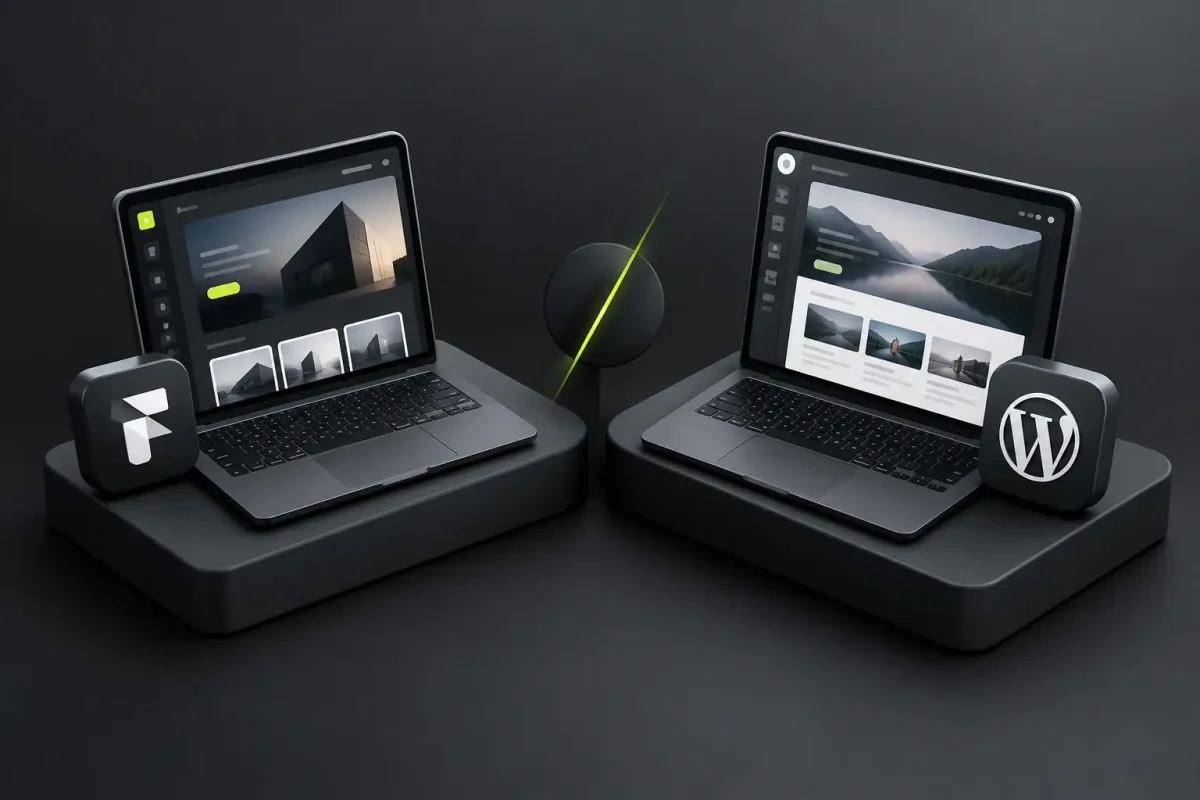
A slow site that's hard to update or looks generic costs you opportunities before anyone finishes a form. If you're choosing between Framer versus WordPress, start with what your business needs to achieve: project a premium brand, publish content regularly, generate leads, or launch fast with an experience that feels like yours.
For many companies in Costa Rica, WordPress is still the automatic answer. It has history, recognition, and a huge plugin ecosystem. Popularity, though, doesn't always equal strategic advantage. Framer offers a different flow: high-level design, animation, and web publishing in a more direct process. The right call depends on your business model, your team, and how much technical control you actually want to take on.
Framer versus WordPress: the real difference
WordPress started as a publishing platform and grew into an ecosystem that can build almost any kind of site. That flexibility is its strength, and it also explains why a project may need a theme, visual builder, plugins, hosting, maintenance, and performance tuning to work well.
Framer starts somewhere else. It was built to create modern visual experiences with speed, design precision, and integrated publishing. You can move from a carefully designed interface to a live site without rebuilding every section across a chain of separate tools. For a corporate page, a campaign landing page, a portfolio, or a service-company site, that can cut time and friction in a meaningful way.
Framer doesn't win every scenario. It fits a specific need better: businesses that prioritize distinctive design, fast execution, and a light site focused on conversion. WordPress usually wins when editorial complexity, specific integrations, or content volume matter more than creative speed.
Design, brand, and launch speed
This is where Framer stands out clearly. Its environment lets you design compositions, interactions, and animations with a logic close to digital design tools. The result doesn't depend on forcing your brand into a rigid template. Design can match the company's personality, guide attention toward an action, and create a first impression that builds trust.
WordPress can look excellent too, but it usually needs the right mix of theme, builder, and custom development. A carefully built site can be impeccable; trouble starts when you begin from a generic template and keep stacking tweaks. The result often feels like many other sites, with visual inconsistencies and more technical weight than you need. Custom web design avoids that path.
For a brand that needs to launch a new offer, capture bookings, or validate a service, speed matters. Framer can take a premium site to production in weeks, and sometimes less on well-defined projects. That speed helps when technical implementation doesn't turn a good idea into a months-long project. To see how that plays out in practice, check what a website in Framer involves.
Performance: less weight, more opportunities
Every second of waiting hurts perceived quality and conversion odds. If someone arrives from Google, social, or a paid campaign and the page takes too long, they aren't evaluating your value proposition. They're looking for the close-tab button.
Framer offers managed hosting and publishing that simplify performance. Its sites can load quickly when they're designed with care, optimized images, and well-structured content. It also reduces the need to install extensions for basic functions, a habit that often adds weight and risk to many WordPress projects.
In WordPress, strong performance is possible, but it isn't guaranteed just because you use the platform. It depends on hosting, the theme, the visual builder, code quality, caching, images, and every installed plugin. A WordPress site optimized by specialists can perform very well. One built without technical architecture can accumulate debt from month one.
The commercial difference is direct: shorter load times help retain visits, improve the mobile experience, and strengthen trust. For a service business, where each inquiry can turn into a meaningful sale, that isn't a minor technical detail.
SEO for search engines and AI-assisted systems
Neither Framer nor WordPress ranks a site on its own. SEO depends on strategy: search intent, clear messaging, content architecture, brand authority, and pages that answer better than the competition. The platform does decide how easy it is to keep a healthy technical base.
Framer lets you set titles, descriptions, URLs, headings, images, and structured content without turning every change into a development ticket. It also makes it easier to build clean, fast, focused pages, qualities that help both traditional search engines and AI-assisted search systems.
WordPress offers more breadth through SEO plugins and advanced editorial tools. That helps companies managing hundreds of articles, multiple authors, complex categories, or established publishing workflows. The cost is that each plugin has to be chosen, configured, and maintained with discipline. Installing an SEO tool doesn't fix a weak strategy or a confusing page. If SEO is a core channel for you, you can also review our SEO and optimization service.
For mid-size commercial sites, prioritizing quality over volume usually pays off. A well-designed service page with useful information, trust signals, and a clear call to action can generate more business than dozens of articles written only to fill a blog.
Content management and team autonomy
WordPress keeps an edge when content sits at the center of the operation. A digital magazine, a media outlet, an academy with a large library, or a company with a big editorial team may need its maturity as a CMS. Its user roles, editorial workflows, and customization options are hard to match.
Framer works especially well for teams that want to update case studies, services, testimonials, team pages, properties, events, or articles without touching the main design. The CMS is visual and accessible, so a marketing person can make changes with more confidence. That protects brand consistency and keeps every update from depending on a developer.
The practical question isn't which CMS has more features. It's how much content your company will publish, who will manage it, and how much complexity is worth carrying. Having more options than you need can also create errors, slowness, and dependency.
Security and maintenance: the part many teams skip
WordPress needs a real maintenance routine. Core, theme, and plugins need updates; integrations need review; backups and security can't be left to chance. That isn't a reason to discard it, but it is an operational responsibility worth budgeting from day one. A website maintenance plan covers exactly that ongoing work.
With Framer, much of that infrastructure is managed by the platform. There are fewer moving parts and fewer places where a third-party update can break a critical section. For a company that needs to focus on selling, serving clients, and growing the brand, that simplicity has value.
Still, no site is free of responsibility. Access has to be managed well, content has to stay current, and forms should be reviewed regularly. Security depends on the platform and on the decisions around it.
When does Framer make sense?
Framer is a strong option if your site needs to sell a clear offer with premium design, load quickly, and go to market without a heavy build. It fits service companies, startups, professional firms, boutique hotels, architecture projects, personal brands, and campaigns that need to stand out from the first visit.
It also fits when the visual experience is part of the sale. A financial consultancy can project clarity and trust. An architecture studio can show its work with rhythm and detail. A hospitality business can make a reservation feel desirable before the form appears. In those cases, design helps convert; it doesn't just decorate.
When is WordPress still the better call?
WordPress can be the right choice if your business publishes content at scale, needs very specific features, or relies on integrations that already exist in its ecosystem. It also makes sense for organizations with a complex editorial operation and a technical team that can own maintenance.
What doesn't make sense is choosing WordPress out of habit and ending up with a heavy, hard-to-edit site that looks like the competition. Choosing Framer only for aesthetics also fails if you need an editorial system with very particular requirements. The platform should serve the business.
At Flow™, we see better results when the decision happens before the first screen is designed: define the commercial goal, the content structure, the primary action, and how much autonomy the team needs. After that, technology stops being an abstract debate and becomes a concrete advantage. If you already have a WordPress site and want to evaluate a move, you can also review how to migrate a site to Framer without losing SEO.
Comparing Framer and WordPress for your next site? Book a 30-minute call and we'll review which platform fits your business model, your team, and the action you want every visit to take.