
When Is It Worth Redesigning a Website?
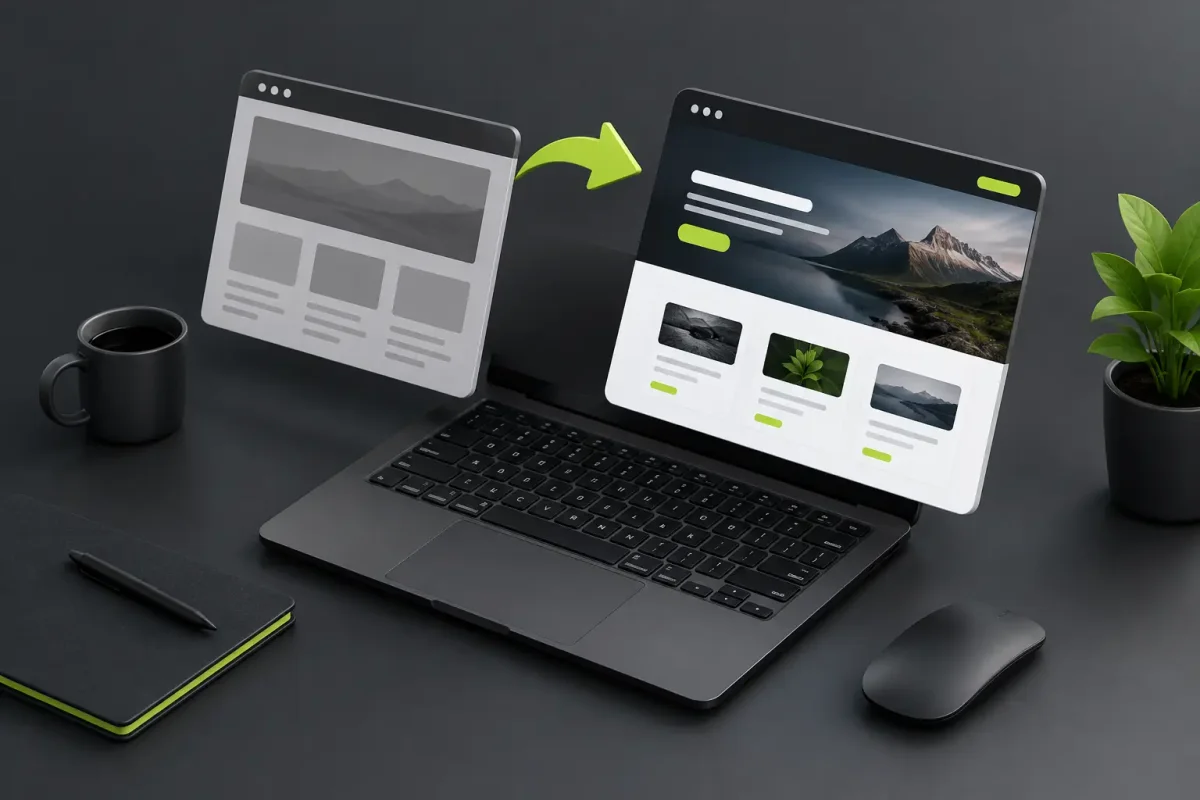
A website can look fine and still hold back sales. It happens when someone arrives from Google, Instagram, or a ChatGPT recommendation and, in the first few seconds, can't tell what you offer, can't find how to reach you, or runs into outdated information. Knowing when it's worth redesigning a website mostly means noticing the moment your site stopped keeping up with the business you've built.
For a small business, the cost of waiting shows up as inquiries that walk away: the traveler comparing hotels, the patient looking for reassurance before booking, the family evaluating a school, or the B2B client checking whether your company can handle the project. Your website serves those people while you're busy. If it doesn't answer them, they contact someone else.
When Is It Worth Redesigning a Website?
You don't need to rebuild your site every two years. A redesign makes sense when something fundamental has changed: your strategy, the experience your customers need, or how the site performs. These are the signs worth checking.
Your Business Has Outgrown Your Current Site
Maybe you started with one service and now run several lines of business. Or you opened a second location, raised your prices, or started serving more demanding clients. If the site still tells the story of an earlier stage, you get an awkward gap: in person your business feels professional, and on screen it looks small or out of date.
A redesign starts before anyone picks colors. First you decide what a visitor needs to understand about your company and what you want them to do next. For a boutique hotel, check availability. For a clinic, book an assessment. For a B2B company, request a proposal. The site's structure has to lead to that step without detours, and a solid website redesign process starts right there.
You Get Visits, but Hardly Any Inquiries
Traffic alone doesn't pay the bills. If people land and leave quickly, almost nobody fills out the form, or they email you asking things the site should already answer, you have a conversion problem. Sometimes the main benefit is buried. Other times there are too many buttons, services are mixed together, or the pages skip the basic questions.
Before committing to a full redesign, find where the journey breaks. A service page might only need real photos, ballpark pricing, or a more direct call to action, and those are conversion fixes you can make without rebuilding anything. If the problem shows up across the whole site, from navigation to the contact form, it's time to rethink the experience from the ground up.
Changing One Sentence Depends on Someone Else
A website shouldn't be a locked file. If changing your hours, adding a testimonial, or fixing an offer means opening a ticket and waiting days, the site loses its value as a sales tool and always runs a step behind your business.
This alone can justify a redesign, even if the design still works. Your team needs a CMS to manage content without touching code or breaking the layout. It also needs a review step, because editing fast shouldn't mean publishing without anyone checking.
On Mobile, It Feels Slow, Awkward, or Untrustworthy
Many owners check their site on a computer and assume everything is fine. But a large share of visits comes from phones, from people short on time and on mobile data. If the text is hard to read, buttons sit too close together, images are too heavy, or the form never ends, you're putting obstacles in front of someone who was about to contact you.
Speed sends a message too. A slow site makes a wellness brand look improvised and costs a tech company credibility before it explains what it does. That's why performance, accessibility, and mobile navigation get planned at the start of a redesign, not patched in at the last minute.
Google and AI Answers Don't Understand Your Business
Today someone might search on Google and also ask ChatGPT, Gemini, or Perplexity what they'd recommend. If your site has generic copy, vague service descriptions, or details that contradict each other, search engines and AI tools have a hard time connecting your business to a specific need.
A well-planned redesign organizes content for people and for search engines: one clear page per service, structured data, answers to the questions your customers actually ask, and real examples of your work. Nobody can guarantee you'll show up in every AI answer, because those results change often. What you can do is give them clear, consistent information so they have something to recommend.
Not Every Problem Means Starting Over
Redesigning doesn't always mean throwing the site away and building a new one. If your brand is well defined, your main pages bring in inquiries, and the platform lets you update content, targeted fixes may be enough: a clearer value proposition, simpler navigation, shorter forms, or new pages for your priority services.
Starting over makes sense when several problems pile up at once, for example a brand identity that no longer fits the business, a platform that holds you back, and content nobody can manage. At that point patches usually cost more in the long run, because each fix removes one annoyance and leaves the cause in place.
Your business timing matters too. If you're about to launch a new offer, enter another market, or invest in ads, fix the website foundation before you drive more traffic to it. Paying for ads that send people to a site that doesn't convert means paying twice.
What a Redesign Worth Paying For Should Solve
A profitable redesign shows in how quickly someone understands your offer, trusts you, and gets in touch or buys. Animations add little if that doesn't happen. After launch, the site also has to be easy to keep current, measure, and fix.
Before you approve a project, ask for clear answers to these four questions:
- What business goal does each key page have, and how will it be measured?
- Which content will your team be able to update without a developer?
- What technical foundation will support SEO and visibility in AI-powered search?
- How will changes be reviewed and approved before they go live?
You'll have to make some trade-offs. A very visual site takes discipline to load fast. A solid SEO architecture usually means more pages and better content. Giving your team autonomy requires permissions and reviews. The job of the redesign is to find the balance that works for your business.
And keep what already works. If a page ranks well, has valuable backlinks, or brings in inquiries, it shouldn't disappear over a style preference. During the redesign you need to protect its URLs, move over the content that matters, and improve things without losing the history you've built. If you're also switching platforms, a well-planned website migration keeps the traffic you worked hard to earn.
Make the Redesign a Growth Tool
The best time to redesign is when you can tie the project to a concrete goal: more direct bookings, selling higher-value services, fewer repeat questions, or better leads. That goal shapes the content, the page order, and the technology you need.
That's why at Flow, web design goes hand in hand with a site you can run yourself. With Flow Studio for Mac you work on the real site, check how it looks on desktop, tablet, and phone, and ask your AI agents for changes from the same place before you publish. You don't have to wait on an agency for every tweak.
Visibility needs follow-up too. A solid SEO and GEO foundation helps the site explain who you are, what you offer, and why you know your field. After launch, keep an eye on what your customers ask, how you show up against competitors, and what content is still missing.
Your site doesn't have to look old to deserve a redesign. It has to be ready for the business you want to run next year. If it isn't, you know where to start.
Not sure whether your website needs a redesign or just a few fixes? Book a 30-minute call and we'll review it together.