
Boutique Hotel Website Case: More Direct Bookings
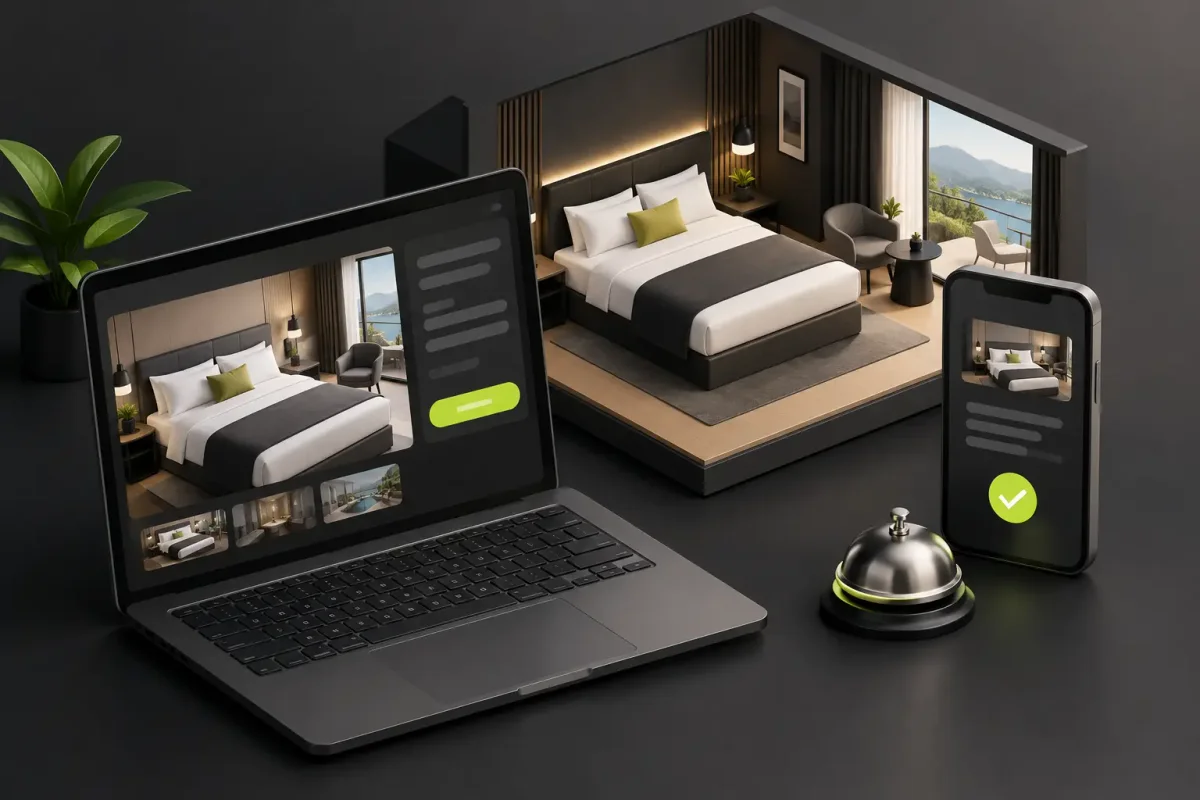
A boutique hotel website gets tested when a couple compares options on their phone. If they find clear answers and a booking button within reach, they book direct. If not, they go to an OTA that charges the hotel a commission. For a small property, a few more direct bookings a month show up in the margin.
That site has to convey an intimate, distinctive experience and also answer practical questions before the visitor opens another tab: location, room types, policies, breakfast, parking, accessibility, nearby experiences, and availability. None of that should be buried behind a photo gallery.
An important note: this case is illustrative, not a specific client. It pulls together problems we often see in Costa Rican hotels: a good reputation, attractive photos, happy guests, and still a slow, outdated website with no clear path to booking direct.
The Hotel Relied Too Much on OTAs
The hotel got visitors from Instagram, Google Maps, and past guests’ recommendations, but many of them ended up booking on third-party platforms. Price played a part, but it didn’t explain everything. The hotel’s own site was slow to answer two basic questions: why should I stay here, and how do I book now?
The site had generic lines like “an oasis of tranquility,” heavy photos, and a booking button that was hard to spot. All the rooms sat in one section with no hint of who each one was for. A couple looking for privacy, a group of friends, or someone who needed to work remotely had to guess which one fit.
On top of that, the team couldn’t edit anything on their own. Changing a seasonal rate, adding a wellness experience, or fixing a policy meant asking for outside help. Every tweak turned into a wait, and the site showed old information right when the hotel most needed to sell.
Boutique Hotel Website Case: Strategy Before Design
The work started by defining what each visit had to achieve, before anyone talked about fonts. Not all traffic arrives with the same intent. Someone searching for “romantic hotel near San José” wants inspiration and proof. Someone who already knows the hotel’s name wants availability, location, and a simple booking. And someone asking ChatGPT or Gemini about hotels with breakfast, nature, or room to work remotely needs that information to exist on the site, be accurate, and leave no room for misreading.
With that settled, the structure was built around the guest’s decisions. The homepage explained the hotel in a few lines, featured the main rooms, and led to booking without making people scroll through everything. Each room got its own page with capacity, bed type, amenities, view, conditions, and photos that helped people picture the stay without overpromising. For what else a site like this should include, we cover the basics in web design for hotels.
A boutique hotel sells a specific kind of stay, and that story needs facts behind it. Calling a room quiet is more convincing when you also say whether it has a balcony, air conditioning, a desk, a bathtub, or a door to the garden.
Editorial Design That Doesn’t Get in the Way of Booking
Many hotel sites treat emotion and conversion as if they were competing. A hotel needs both, in a different order depending on the page. Images, visual identity, and tone make the hotel memorable. Navigation, calls to action, and practical information make it bookable.
In this case, the design used generous spacing, carefully chosen photos, and an identity that matched the property. It left out animations that slow loading, carousels almost nobody watches, and autoplay videos that eat mobile data. A site that loads fast also feels more cared for; our guide on improving website speed explains what to check first.
Extra decisions were cut too. The booking button stayed visible at all times, and the experiences, food, and location pages worked as reasons to choose the hotel without becoming dead ends. If someone got curious about a local hike or a special dinner, they could go back to booking without starting over.
Content That Shows Up When Someone Asks
Good design is no longer enough to get found. Before booking, people check Google, maps, reviews, and AI assistants. If someone asks for a boutique hotel for a weekend away, the hotel needs content that explains what it offers with facts that can be checked.
That’s where SEO and GEO come in. SEO helps traditional search engines understand the site and see it as relevant. GEO prepares the business’s information to show up accurately in AI-generated answers. In both cases, the job is organizing the hotel’s real information so it can be found, compared, and cited, without stuffing the copy with keywords.
For the hotel, that meant writing unique titles and descriptions for each page and adding lodging structured data, useful FAQs, and a consistent set of facts: address, contact, hours, policies, services, room types, and experiences. The site also published an llms.txt file, which tells AI systems which content on the site matters most. This is the kind of work we do in SEO and optimization.
One limit worth stating plainly: nobody can guarantee that ChatGPT, Gemini, or Google will show a hotel in a specific answer. Results change with the query, the location, and the sources available. What you can do is remove ambiguity, strengthen trust signals, and track how the business shows up against its competitors.
Booking Direct Should Be Easier Than Comparing
Booking direct doesn’t always win on price. Sometimes it wins on a clearer policy, a small welcome touch, some flexibility, or the comfort of talking to the hotel itself. Those advantages need to be visible before the visitor leaves.
In this case, the booking engine was placed in plain view, and every relevant page invited people to check dates. There were no permanent discounts that would eat into profitability. Instead, the site highlighted benefits the hotel could actually keep up: personal attention, local recommendations, and clear terms for changes or cancellations. More on that flow in reservation websites.
The contact form was redesigned for requests the booking engine doesn’t handle: small groups, celebrations, special requests, or corporate stays. Ask for too much and people abandon it; ask for too little and you end up in a long email back-and-forth. The goal is to ask for just enough for the team to reply with a useful proposal.
The Site Should Move at the Hotel’s Pace
A hotel runs on seasons, events, weather, partnerships, and availability. If the website can’t be edited quickly, it freezes in place. The team needed to post news, update experiences, and adjust copy without calling a developer every time.
With a well-configured CMS, the hotel manages rooms, limited-time offers, local guides, and testimonials from one place without breaking the design. For heavier tasks, like reviewing content, suggesting SEO improvements, or preparing a seasonal page, an AI agent can get the work moving faster.
That doesn’t mean handing everything to a machine. An agent carries out tasks based on instructions and context, and whatever it proposes gets reviewed before publishing, especially anything touching rates, policies, availability, or service promises. The hotel has the final say.
At Flow, we bring that work into one place: the business manages its site, assigns tasks to agents, and checks how it shows up in search engines and AI tools. For a small team, that means knowing what happens with the website after launch.
What to Measure After Launch
Visits alone don’t tell you much. For a boutique hotel, it’s worth looking at where people come from, which pages they view before booking, how many move on to the booking engine, and what inquiries come in. If a room page gets traffic but almost nobody starts a booking, the issue might be the offer, the photos, the perceived price, or missing details.
It also helps to review which searches bring people to the site and what they ask AI tools. Maybe the hotel has a great offer for workations, local food, or anniversary getaways, but nobody finds it because that information lives only on social media or in the team’s heads.
Results don’t come overnight. SEO takes time, and trust in a brand is built through consistency. What a fast, clear, easy-to-edit website does give you is room to test, learn, and adjust before another season goes to commissions.
To review your own site, ask yourself this: when someone has already decided to travel, does your website give them a clear reason to choose you and an easy way to book? If the answer is no, you know what to fix first.
Run a hotel or vacation rental and want more direct bookings from your website? Book a 30-minute call and we’ll review your site together.