
Types of Service Pages That Convert
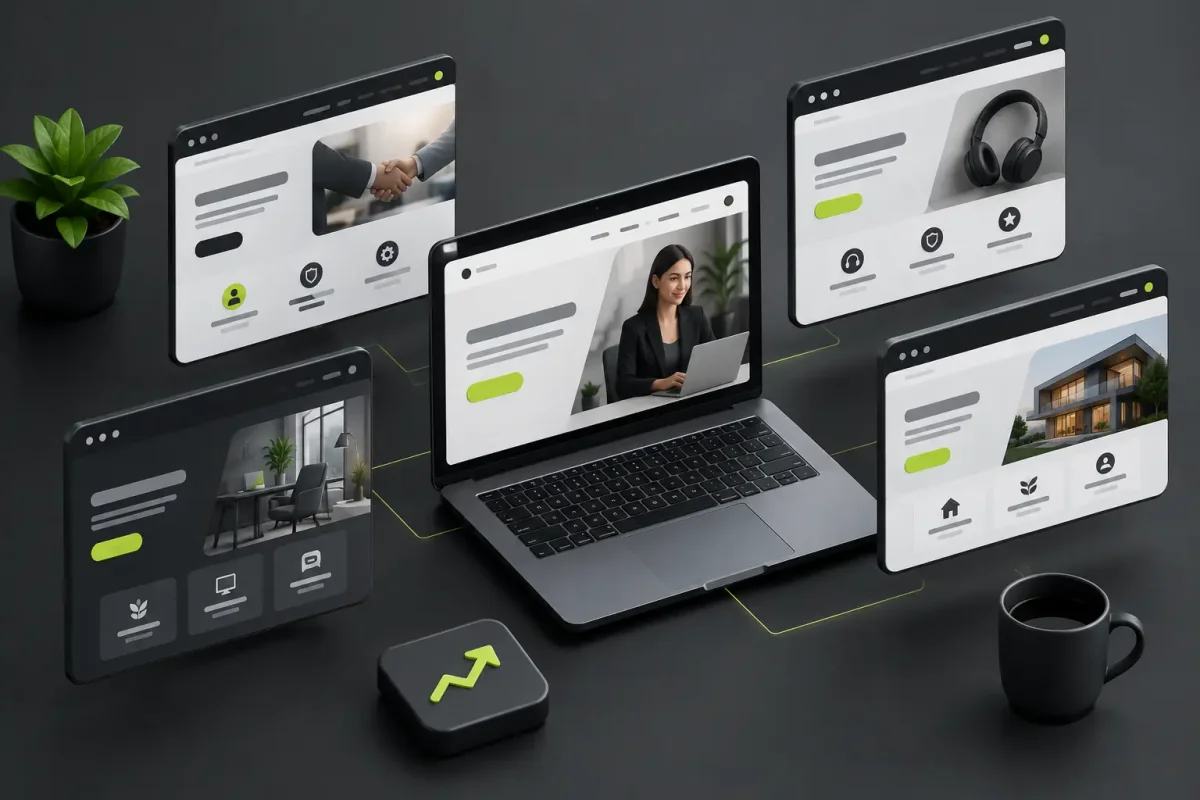
A service company doesn't need to fill its website with pages just for the sake of it. It needs the right pages, with the right message, at the moment when a person is ready to trust, quote, or book. Choosing the types of service pages defines whether your site will be a pretty business card or an active machine for generating opportunities.
For an architecture firm, a clinic, a tech company, or a hotel, the goal is not the same. Some brands need to explain complex processes; others need to convey credibility in seconds. That's why a high-performance web structure isn't copied from a template: it's designed around the decision you want to provoke.
The Homepage: Clarity Over Decoration
The homepage is the starting point for many visits, but it shouldn't try to say everything. Its job is to quickly answer three questions: what you do, who you do it for, and why someone should choose you.
A generic headline like innovative solutions for your business doesn't help anyone. Instead, a concrete proposal, accompanied by an image or animation that reinforces the brand, creates direction. If you offer financial consulting, software development, interior design, or legal services, the first screen should communicate the value without forcing the person to guess it.
After that, the page can present the main services, trust signals, featured cases, and a clear call to action. There's no need to saturate it. Navigation exists to delve deeper; the homepage exists to push for the next step.
Individual Service Page: Where Conversion Happens
If there's a page that deserves strategic attention, it's this one. A page for each relevant service allows you to speak precisely about a need, use more specific search language, and guide each prospect toward an action.
For example, an agency shouldn't hide web design, visual identity, and SEO within a single block of text. Each solution has a distinct intention. Someone looking to redesign a brand needs different arguments than someone looking to increase bookings from Google.
An effective service page presents the problem you solve, explains the approach, shows concrete benefits, and reduces doubts. It should also include a visible action: request a proposal, schedule a call, ask for a diagnosis, or quote a project. The button is not an ornament. It's the connection between interest and business opportunity.
What a Good Service Page Should Answer
You don't need to turn every section into an endless list of features. But you should make it clear what the service includes, how it develops, how long it may take, and what result is expected. When the process has several stages, visualizing it helps reduce friction and projects order.
Details change depending on the sector. A remodeling company can show scopes, materials, and estimated times. A B2B firm can explain deliverables, methodology, and integration with internal teams. In both cases, the rule is the same: talk about the business outcome, not just the technical capability.
Types of Service Pages According to Customer Intent
Not all visitors arrive with the same level of certainty. Some already know what they need and want to quote. Others are just comparing options. The site architecture must cater to both moments without turning the experience into a maze.
Industry or Sector Pages
The same solution can have different applications for hotels, real estate, non-profit organizations, or tech companies. Industry pages allow you to adapt the message, examples, and objections to each audience.
They work especially well when you sell B2B services or when your process changes depending on the type of client. The care is in not duplicating content with minimal changes. Each page should provide a real perspective: industry challenges, relevant cases, and benefits that make sense in that context.
Case Studies and Portfolio
Claiming you do great work is easy. Showing it is much more persuasive. Case studies turn results and design decisions into visible evidence.
A good published project is not limited to a gallery of screens. It tells what problem existed, what was done, and what changed. It could be a faster site, a more consistent brand, more contact requests, or a clearer experience for users. If you can't publish exact metrics due to confidentiality, at least explain the strategic and visual improvement achieved.
For creative services, the portfolio is a quality filter. For technical or consulting services, it's a test of judgment. In both cases, it helps the prospect imagine working with you.
Process Page
Hiring a professional service can feel uncertain, especially if the investment is significant. The process page transforms that uncertainty into an understandable path: discovery, strategy, design, development, validation, and launch, for example.
There's no need to promise that everything will be immediate. It's better to communicate realistic timelines and explain what you need from the client to move forward. Transparency attracts better projects and avoids misaligned conversations from the start.
For a web studio, detailing that a project in Framer can launch in less than two weeks and one in Webflow in less than four weeks provides valuable reference, as long as the scope is well defined. Speed sells when backed by a solid process.
Contact or Quotation Page
A contact page shouldn't be the forgotten corner of the site. When a person arrives there, they have already made a journey of trust. Don't put unnecessary obstacles in their way.
The form should only ask for the information that really helps qualify the project: name, company, email, service of interest, investment range, and objective. Asking for a complete story in ten fields often lowers conversions. On the other hand, a form that's too basic can produce unhelpful inquiries. The balance depends on the complexity of the service.
It's also a good idea to explain what will happen after submitting the request. A simple expectation, like receiving a response within a certain timeframe or scheduling an initial meeting, conveys attention and professionalism.
Pages That Build Trust Without Distracting
There are pages that rarely generate a direct conversion but make commercial pages convert better. The About Us section, for example, can humanize a service company, explain its approach, and introduce the team when that adds credibility.
Frequently asked questions are useful when there are repeated doubts about investment, timelines, coverage, support, or work modality. They shouldn't become an information dump. If a question is decisive for purchasing, it deserves to appear near the call to action on the service page.
A blog or resource center can strengthen organic visibility and authority, especially in services with longer sales cycles. But publishing articles without a topic strategy or relation to the main solutions only adds maintenance. The priority is always to build the pages that convert first.
Design, Speed, and SEO: The Invisible Foundation
The best structure loses strength if the website takes too long to load, breaks on mobile, or doesn't allow easy content updates. Each service page should feel fast, clear, and consistent, from the first visit to the form submission.
It also needs a solid SEO foundation designed for how people search and how search engines interpret information with artificial intelligence. This involves clear hierarchies, specific content, useful titles, coherent contact data, and a flawless technical experience. It's not about repeating keywords; it's about responding better than others to a real intent.
Tools like Webflow and Framer allow you to combine visual control, flexible CMS, elegant animations, and performance without relying on generic templates. At Flow, this combination is used to build sites that look premium, load quickly, and give each company's team control over their content.
Your website doesn't need to have all possible pages. It needs to eliminate the doubts that hinder a decision and give each visitor a clear reason to move forward. That's where a digital presence stops being an expense and starts working as part of your sales team.