
The Best Visual Enterprise CMSs
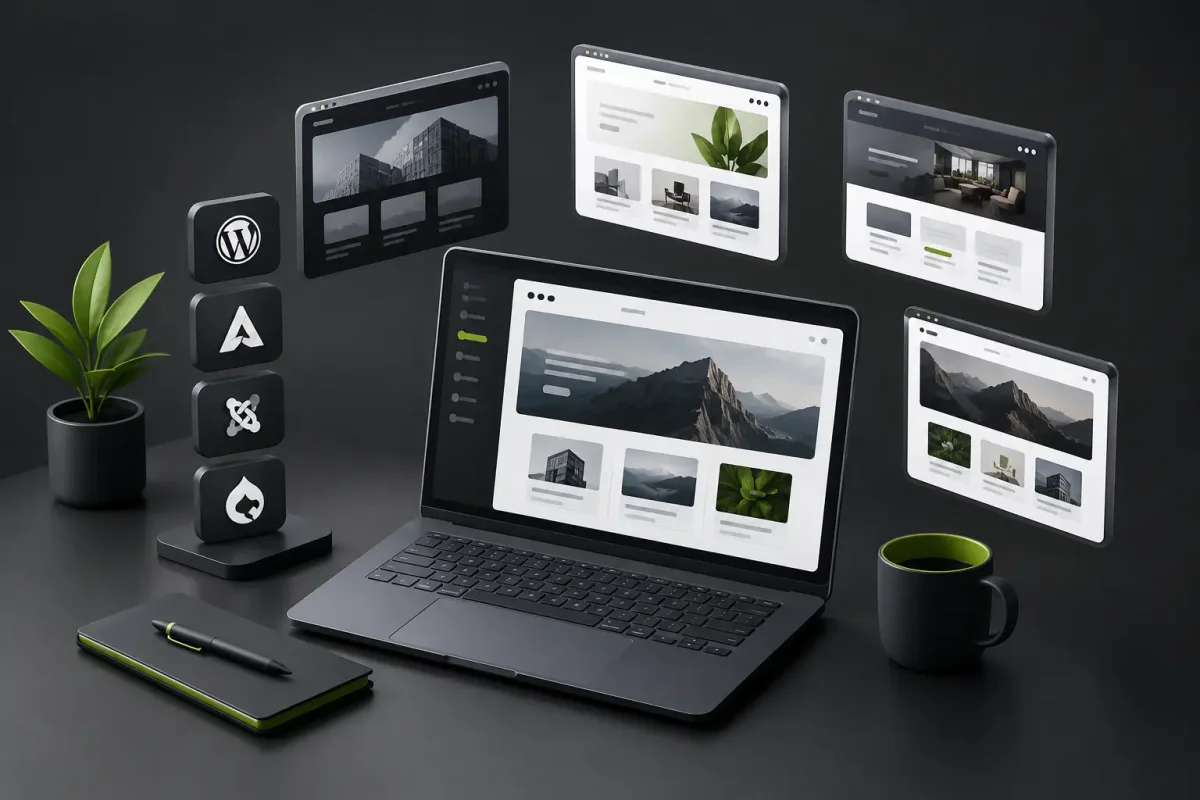
An enterprise shouldn't take weeks to publish a new service page, update a case study, or launch a campaign. However, this still happens when the site relies entirely on code, fragile plugins, or slow processes between marketing and development. The best visual enterprise CMSs solve this bottleneck: they allow content management with autonomy without sacrificing design, speed, or brand control.
But not all visual CMSs are suitable for the same type of business. A financial firm with approval requirements, a hospitality company that needs to update offers, and a tech brand that publishes resources to capture leads do not have the same priorities. The right platform is the one that turns the site into a business asset, not a pending task.
What a Visual CMS for Enterprises Should Offer
An intuitive content editor is just the starting point. For a business, a CMS must preserve visual consistency while the team updates texts, images, projects, vacancies, events, or articles. If every adjustment opens the door to breaking a component, altering the mobile version, or weakening the user experience, the supposed autonomy becomes a risk.
The second criterion is performance. The website must load quickly, respond well on mobile devices, and sustain traffic campaigns without becoming a technical problem. This impacts brand perception, conversion, and the ability to appear in traditional search results and AI-driven search experiences.
Governance also matters. In a business operation, it is advisable to define who can edit, who approves, and which parts of the interface remain protected. The best CMS is not necessarily the one that offers the most buttons, but the one that allows each person to work within clear boundaries.
Before deciding, evaluate these five points: design quality and visual editing, speed and security of the infrastructure, flexibility of the content model, technical SEO possibilities, and ease of maintenance in the medium term. Budget matters, of course, but the real cost appears when a platform limits growth, forces a site rebuild, or requires hours of support for basic changes.
The Best Visual Enterprise CMSs by Scenario
Webflow: Visual Control, Structure, and Growth
Webflow is one of the strongest options for companies that need a differentiated digital presence and want to manage content without resorting to an admin filled with extensions. Its great advantage lies in combining design freedom with a clear CMS structure for collections such as projects, locations, services, team, resources, testimonials, or articles.
For an architecture firm, for example, each project can be built as a CMS record with defined fields for location, gallery, type of work, metrics, and description. The team updates the portfolio without altering the visual composition created by design. The result is order, publication speed, and a consistent brand.
Webflow works especially well when the site needs elegant animations, campaign landing pages, custom components, and a polished experience on every screen. It also offers a managed infrastructure that reduces dependence on routine technical tasks, such as maintaining compatible plugins or addressing conflicts between updates.
Its main consideration is the initial implementation. To truly leverage it, the content model, SEO architecture, and components must be designed thoughtfully. An improvised build can limit the team as much as any other platform. When executed well, Webflow delivers a highly competitive balance between business autonomy and premium quality.
Framer: Speed of Launch for Agile Brands
Framer stands out when the priority is to quickly publish a visually impactful site. It is ideal for startups, professional services, digital products, campaigns, and brands that require a modern website without prolonging development for months. Its visual environment makes it easy to create expressive interfaces and manage simple updates with agility.
For a corporate site with sections for services, team, resources, and campaign pages, Framer can be an efficient choice. It allows moving from idea to published experience very quickly, a real advantage when there is a presentation, opening, or lead generation strategy nearby.
The downside appears in projects with a very complex editorial architecture or large volumes of structured content. If the company plans to manage hundreds of records with advanced relationships between them, Webflow or another solution with broader data modeling may be more convenient. Framer shines when speed, design, and simplicity weigh more than operational complexity.
WordPress: Broad Flexibility with More Responsibility
WordPress remains a valid alternative for companies that need specific features, mature integrations, or extensive editorial operations. Its ecosystem is vast and can adapt to many scenarios. For certain portals, media, sites with particular functionalities, or teams accustomed to its interface, that flexibility is valuable.
The challenge is that flexibility does not come for free. Many enterprise WordPress sites depend on themes, visual builders, and plugins from different providers. This combination can affect performance, create visual inconsistencies, and increase maintenance load. It doesn't mean WordPress is a bad choice, but it requires a serious technical strategy, quality hosting, and clear responsibilities for security, updates, and optimization.
It is a good option when functional needs justify that complexity. For a brand looking for a highly customized, fast, and easy-to-maintain site with few dependencies, a more integrated visual platform is often a cleaner route.
Contentful and Headless CMSs: Power for Large Ecosystems
Headless CMSs like Contentful separate content from the visual layer. Instead of editing a complete page within a canvas, the team manages structured data that is then published across different channels: web, app, internal screens, email, or other digital products.
This approach makes sense for companies with multiple platforms, internal development teams, and an omnichannel content strategy. It provides a lot of freedom to integrate systems and reuse information. In return, it demands greater technical capability and typically does not offer the visual immediacy that a marketing team expects when editing a landing page.
It is not the first recommendation for a company that simply needs to refresh its corporate site and generate more inquiries. It can be the right answer for a digital organization with complex processes, multiple markets, and a consolidated technological architecture.
How to Choose Without Buying More Platform Than Necessary
The right question is not which CMS has the most features. It is what your team should be able to do each week without creating dependency, errors, or delays. If marketing publishes campaigns and case studies, they need a visual editor protected by well-designed components. If the priority is to launch a site with a high visual level in a short time, Framer may be sufficient. If the site will be a center for content, services, and long-term lead generation, Webflow offers more room to grow.
It is also advisable to review the type of content before starting design. Many companies think first about pages and then about data. The smarter approach is to define which elements will be repeated: services, locations, products, testimonials, jobs, publications, or projects. This decision determines the CMS structure and makes future updates quick rather than manual.
Request a realistic demonstration of the editorial process. Ask to see how an entry is created, how a campaign page is updated, what happens on mobile, and what permissions each role will have. A pretty interface is not enough if the workflow does not fit your operation.
The CMS is Part of the Conversion Strategy
A well-chosen visual CMS reduces internal friction, but its greater value lies outside: it allows for quicker responses to the market. It can create a landing page for a new audience, publish a guide that resolves business questions, or update an offer without waiting in a development queue. That speed can make the difference between capturing a lead and losing it to a more agile brand.
At Flow, the focus is not on choosing a platform because it's trendy. It is about designing a visual system that gives the company creative superpowers without compromising performance, SEO, or security. The best decision will be the one that makes your site look extraordinary today and remains easy to evolve as the business changes.