
SEO Costa Rica: What Actually Generates Results
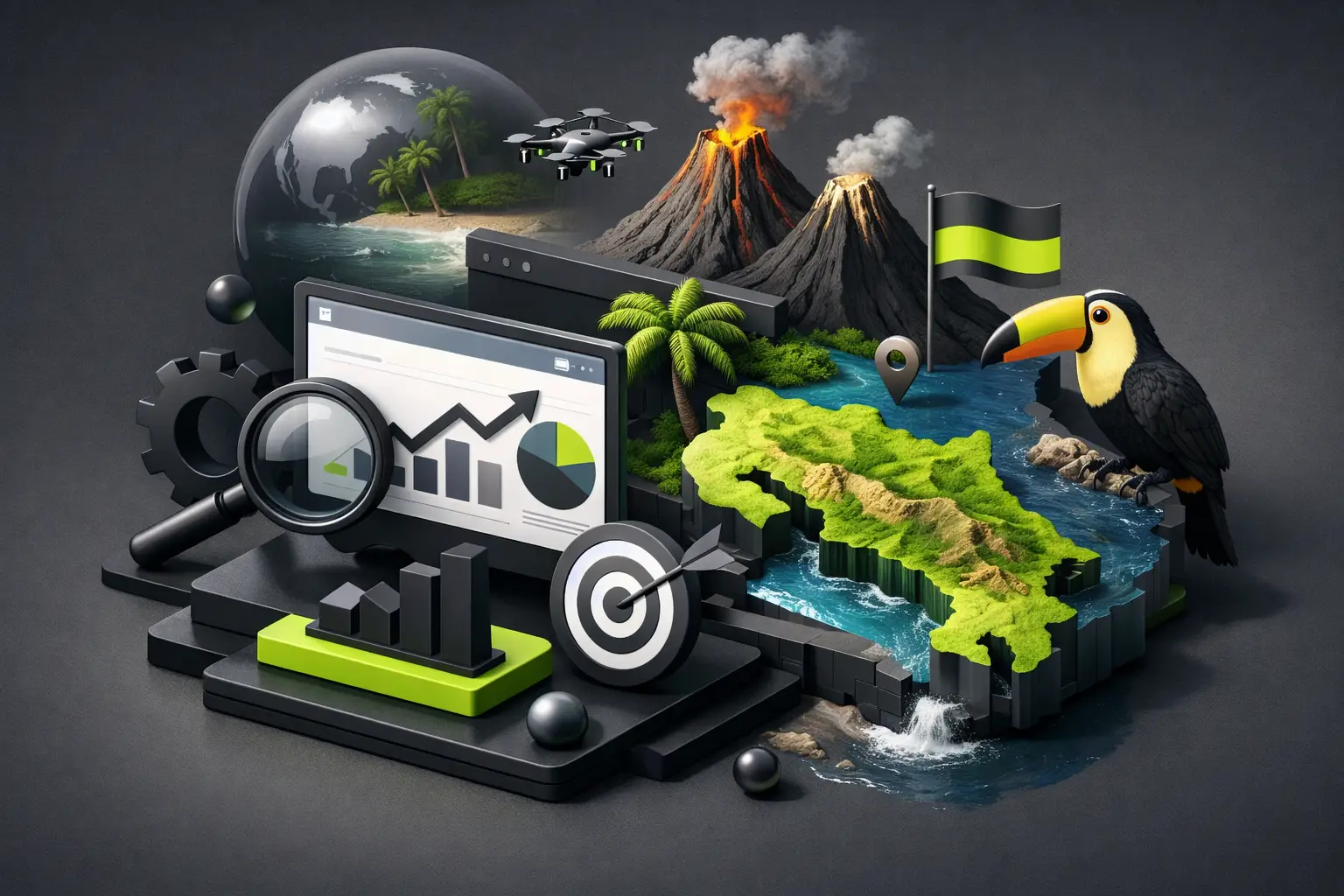
There are sites that look good, but don't sell. And there are sites that do generate calls, bookings, form submissions, and real opportunities. When a company searches for SEO Costa Rica, they're almost always trying to solve this: stop having a pretty but invisible website, or a visible website that doesn't convert.
The problem is that many conversations about SEO are still trapped in an old version of the internet. People talk about keywords, blogs, and tags as if that were enough. Today it's not. Positioning depends on a much more strategic mix of speed, structure, user experience, search intent, brand authority, and commercial clarity. If a website fails in one of those layers, growth stalls.
What It Means to Do SEO Costa Rica Today
Doing SEO is no longer about filling pages with repeated terms or publishing articles out of obligation. For a company in Costa Rica, it means building digital presence with local, technical, and commercial criteria. Local, because context matters. Technical, because Google and other search engines reward fast, secure, and well-structured sites. Commercial, because there's no point in attracting visits if those visits don't do anything.
That's the difference between a site that merely exists and a digital asset that pushes the business forward. If an architecture firm, clinic, hotel, or professional services company wants to compete seriously, they need a website designed to rank and convert at the same time.
Here's a key point: SEO doesn't start in the blog. It starts at the foundation of the site. In how it's built, how information is organized, how fast it loads, how it looks on mobile, and how easy it is for users to understand the next step.
The Most Common SEO Mistake in Costa Rica
Many brands invest first in design and then try to "add SEO" on top. Or they do the opposite: prioritize content and neglect visual experience and conversion. Both paths fall short.
A slow, generic, or poorly designed site can limit any positioning strategy. And a beautiful site, full of heavy animations or without clear structure, also can. Good SEO needs intelligent architecture. That includes correct hierarchies, pages oriented toward search intent, well-written copy, and an experience that doesn't waste time.
In Costa Rica, this is especially noticeable in sectors where the purchasing decision depends on immediate trust. Legal, health, real estate, hospitality, financial services, consulting. In those markets, a confusing website not only lowers rankings. It also lowers credibility.
SEO Costa Rica and Real User Intent
Not all searches are worth the same. That's a simple truth many strategies ignore.
Some people search for general information. Others are already comparing options. And others want to hire soon. If a brand creates content without distinguishing those stages, it ends up attracting little-useful traffic or leaving money on the table.
For example, positioning an informational page about a service isn't the same as a page designed to capture leads. It's also different to write for a broad search than for local or transactional intent. The fine work is in aligning each page with what the user really needs at that moment.
That changes how you write, design, and structure the site. It changes calls to action. It changes the order of information. It even changes the depth of content. The most effective SEO doesn't pursue visits by volume. It pursues visibility in front of the right audience.
The Technical Part That Actually Moves the Needle
There's a reason some sites advance quickly and others don't, even if both have acceptable content. The difference is usually in the technical foundation.
A site optimized for modern search engines needs to load fast, adapt well to mobile, have clean code, correct semantic structure, and simple content management. It also needs security, stability, and control. If updating a page takes days or depends completely on a developer, the team loses agility and SEO becomes naturally slow.
That's why more and more companies prefer powerful visual platforms that allow combining premium design with serious performance. When the website's technology supports the strategy, publishing, adjusting, and scaling becomes much easier. And that matters, because SEO isn't an isolated event. It's continuous improvement.
Design Does Affect Positioning
There's still an idea that design and SEO are separate worlds. They're not.
Good design reduces friction. It helps users understand the offer, navigate better, stay longer, and convert with fewer doubts. All of that sends valuable signals. Not because Google "rewards beauty," but because a well-designed site usually solves the complete experience better.
There's also a direct commercial effect. If someone arrives from an organic search and finds a disorganized, slow, or visually poor page, the perception of quality drops immediately. Conversely, when the brand presents itself with clarity, speed, and strong identity, SEO stops being just a traffic source and becomes a source of trust.
That's one of the best-used creative superpowers in a digital strategy: making design not compete with performance, but enhance it.
Local Matters, But Not Automatically
Appearing in local searches in Costa Rica can be very valuable, especially for businesses that serve by area, schedule, or physical presence. But not all companies should focus their strategy the same way.
If the business depends on customers in a specific city, it's worth working location-oriented pages, local relevance signals, and content connected to real market needs. If the brand sells services nationally or even regionally, the focus should open beyond strictly local terms.
In San José, for example, digital competition is usually higher in several sectors. That forces more precision. It's not enough to repeat the city name several times. You have to build better, clearer, more useful pages than your competitors'.
What a Serious Strategy Should Include
A well-executed SEO strategy starts with diagnosis, not assumptions. First, understand how the ideal customer searches, what pages the brand needs, where real opportunities exist, and what technical obstacles are holding the site back.
Then comes execution. Content architecture, on-page optimization, speed, header structure, intent-driven copy, interlinking where appropriate, strong service pages, and constant measurement. If editorial content is needed, it's created with a concrete purpose, not to fill space.
There's also an important nuance to accept: not all results arrive at the same pace. Some technical improvements can help quickly. Ranking in competitive searches takes longer. And if the site starts from a weak foundation, you first have to fix that structure before expecting sustained growth.
How to Know If Your Site Is Slowing Down Your SEO
There are pretty clear signals. The site is slow to load, especially on mobile. Service pages are vague or too short. The design feels generic. There's no clear content hierarchy. Users don't quickly understand what the company does or why to choose it. Or worse, the site gets visits but barely generates contacts.
That last case is especially expensive. Because it gives the impression that "SEO works," when really it's only bringing attention without results. A good site not only appears. It also directs users toward concrete action.
That's why the smartest work isn't always publishing more. Sometimes it's redesigning better, simplifying the message, improving speed, and organizing architecture so each visit has more value.
The New Scenario: Search Engines, AI, and Better-Prepared Brands
Search is changing. Engines no longer just index text. They interpret context, experience, authority, and usefulness with more precision. Plus, the integration of artificial intelligence in search engines is pushing brands to be clearer, more structured, and more consistent.
That favors companies that build well from the start. Fast sites, solid content, clear identity, clean structure, and messages thought for real people. Not to trick algorithms.
That's where modern execution makes a difference. A studio like Flow, focused on high-performance sites with premium design and SEO integrated from the foundation, understands that visibility isn't improvised. It's designed.
If a brand in Costa Rica wants to grow seriously with their website, the question is no longer whether they need SEO. The right question is whether their web is ready to sustain it. Because when design, speed, strategy, and commercial clarity work together, positioning stops being a technical promise and becomes results you actually feel in the business.