Framer Landing Pages That Actually Convert
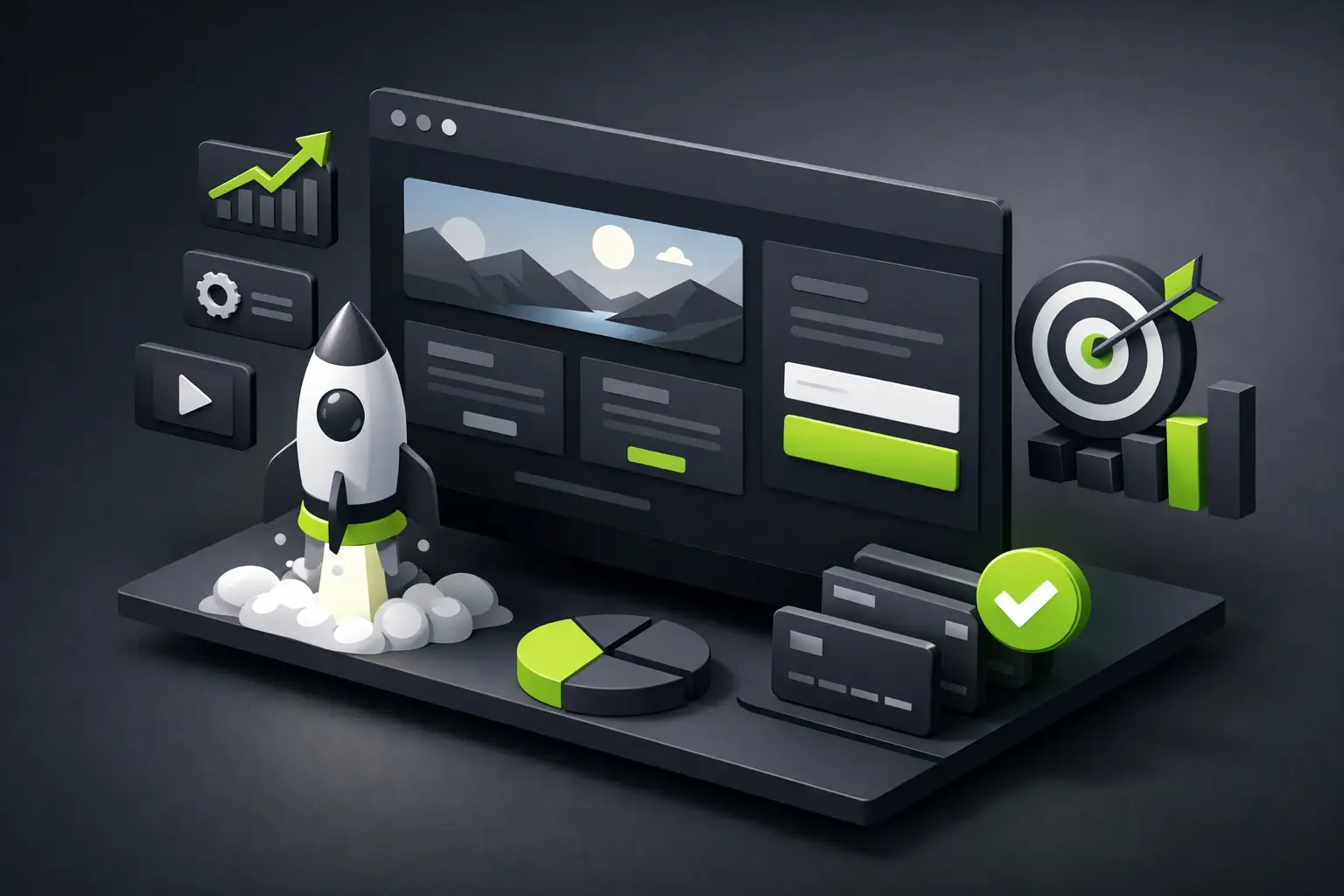
A landing page that loads slowly, muddies the message, or looks generic loses sales before it even starts. That's why Framer landing pages have become such an attractive option for brands that need to launch quickly, look premium, and convert without spending months on development.
Framer isn't just about visuals. Used well, it builds agile experiences with thoughtful animations, clear structure, and a modern digital product feel that elevates brand perception from the first scroll. For businesses that live off leads, bookings, or commercial inquiries, that difference matters.
What Makes Framer Landing Pages Special
The most obvious advantage of Framer is speed. You can go from idea to published page in far less time than traditional development, without sacrificing visual quality. That matters when you need to validate an offer, launch a campaign, or present a new service without slowing down the business.
But speed alone doesn't sell. What makes Framer strong is the combination of design freedom and efficient execution. The page can feel completely customized, with clear visual hierarchy, dynamic sections, and microinteractions that guide attention, rather than looking like a barely tweaked template.
There's also a strategic point: a landing page doesn't need to carry the complexity of a full corporate site. Its job is to move a person toward one specific action. Framer fits that format well because it makes it easy to build focused, clean pages with less friction.
When Framer Is the Best Choice
Not every brand needs the same thing. There are projects where Framer shines bright and others where it's worth evaluating alternatives.
If your company needs to launch a campaign soon, test a value proposition, or go to market with a highly visual presence, Framer has a clear advantage. It's ideal for lead capture pages, product launches, events, premium services, digital products, creative firms, and businesses where visual perception directly influences decisions.
It also works well when your team values being able to make adjustments without depending on long development cycles. Changing copy, reorganizing sections, or iterating a message can be faster, and that helps when a campaign is live and needs real optimization.
That said, if the project requires a very large content architecture, complex integrations, or a heavy dynamic content system, it might be worth reviewing whether Framer is the most efficient path. It's not an absolute limitation, but it's a point where you should think about the complete picture, not just launch speed.
Framer Landing Pages and Conversion: Where You Win or Lose
A good landing page isn't measured by how pretty it looks in Figma. It's measured by what it achieves. Forms submitted, meetings scheduled, quotes requested, reservations made. That's where design and strategy have to work together.
Framer lets you create pages with a lot of control over visual rhythm. That helps you order the user journey: strong headline, direct value proposition, trust signal, clear benefits, and a call-to-action that doesn't compete with ten other distractions.
That control also helps reduce friction. An effective landing doesn't explain everything. It explains what's needed for the person to move forward. If the main message takes too long to appear, if the form asks for too much data, or if animations feel like noise, conversion drops even though the design looks modern.
That's why the real superpower of a Framer landing page isn't the visual effect. It's using that visual language to drive clarity, trust, and decision.
Premium Design Does Impact Results
Some brands still see design as decoration. On a landing page, that gets expensive. When a page feels improvised, visitors feel the service might be too.
Premium design doesn't mean filling the screen with effects. It means every block has intention. Well-chosen typography, space that lets the message breathe, images consistent with the brand, and composition that conveys order, level, and credibility. In sectors like technology, finance, hospitality, architecture, or professional services, that perception can tip the scales.
Framer provides a strong foundation to achieve that result without getting stuck in endless processes. That gives commercial value to companies that need to go online fast but don't want to pay the price of looking generic.
SEO on Framer Landing Pages: It Matters
There's a belief that landing pages only work for ads and not for search engines. Sometimes that's true. Sometimes it's not. It depends on the goal.
If the page addresses a concrete search intent, SEO can be a real source of qualified traffic. In that case, content structure, load speed, heading hierarchy, intent-focused text, and message clarity matter as much as design.
Framer can offer good technical performance, but the result doesn't appear just by using the platform. A poorly planned landing, with empty text or sections created just to look modern, won't rank well or convert better. Design needs to work alongside content strategy and a clear read of how users search today, including environments where artificial intelligence summarizes, interprets, and prioritizes useful information.
In other words: the platform helps, but the real advantage is in how you build the page from business intent.
What a Framer Landing Page Needs to Actually Work
The starting point is a precise value proposition. If the person doesn't understand in seconds what the brand offers and why it should matter to them, you're already late. Then comes the structure: grounded benefits, trust signals, social proof where it applies, and a simple call-to-action.
The second key element is perceived speed. Not just that the page loads fast, but that it feels agile. The main message appears early, the user doesn't have to guess where to click, and mobile experience is solved just as well as desktop.
The third is focus. Many landing pages fail by trying to look like a full website. They add excessive menus, too many exits, redundant blocks, and bloated text. An effective landing cuts ruthlessly. It prioritizes. It drives toward one main decision.
And the fourth is measurement. If you don't define what action counts as a conversion, the page stays pretty but blind. A Framer landing should go live with clear goals, tracking, and room to iterate based on real behavior.
Speed Isn't the Same as Rushing
One of Framer's biggest draws is production time. For brands that need to move fast, that has enormous value. Launching sooner lets you capture demand first, validate campaigns, and keep a commercial project from stalling waiting for development.
But there's a huge difference between speed and hurry. A landing built in a few days can perform very well if there's strategic thinking behind it. Real speed comes from a clear process, not from skipping important decisions.
That's where a specialized studio makes a difference. It's not just about knowing the tool. It's about translating business goals into a page that looks strong, loads well, and has conversion logic. That's the kind of execution that makes Framer a real advantage, not just a visual trend.
What Many Companies Overlook
Sometimes the problem isn't the platform. It's asking the landing page to fix a confusing offer. If the service isn't well explained, if the difference doesn't exist, or if the call-to-action doesn't match the customer's stage, no tool saves performance.
Content is also often underestimated. On high-conversion pages, every line counts. An ambiguous headline, generic subheading, or overly broad promise weakens everything. Framer can make the experience look flawless, but the message is still the engine.
For growing companies, especially those competing for attention in active markets like San José, a well-thought landing page can greatly accelerate opportunity generation. But only when it brings three things together: thoughtful design, fast technology, and a clear commercial offer.
If the goal is to launch quickly and look like a serious brand from day one, Framer landing pages make a lot of sense. The key isn't publishing faster just to publish. It's using that speed to put online a page that drives results from the first click. That's where design stops being presentation and becomes business.