Integrate AI into a stack nobody cleaned up
Data in three places, legacy auth, a half-wired CRM, and a workflow that lives between WhatsApp and a spreadsheet. We embed an engineer who writes integration code and leaves the system usable.

The model already exists. What's missing is someone inside your team who makes it work against real data, real workflows, and a brand you can actually launch.
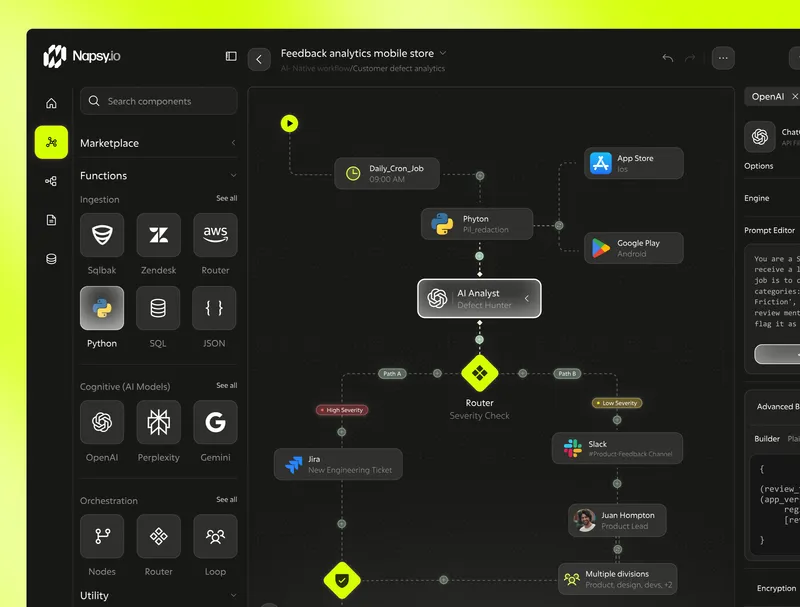
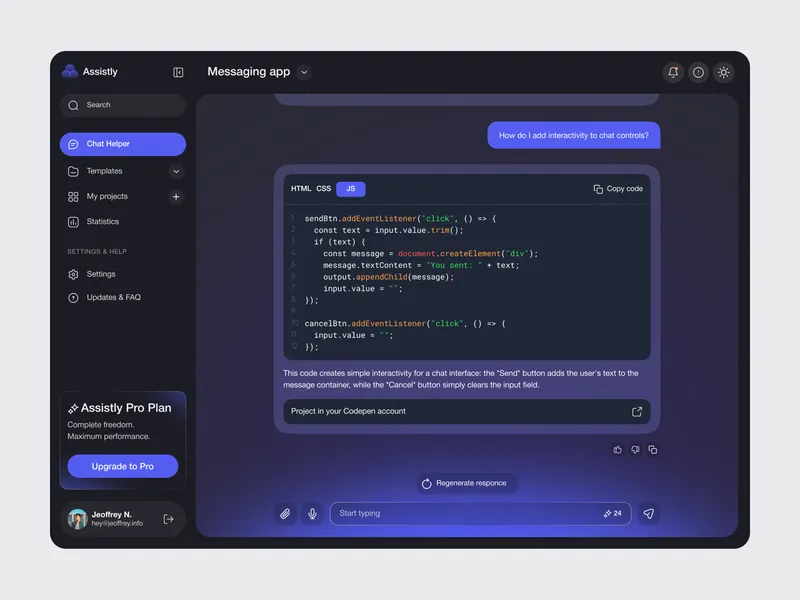
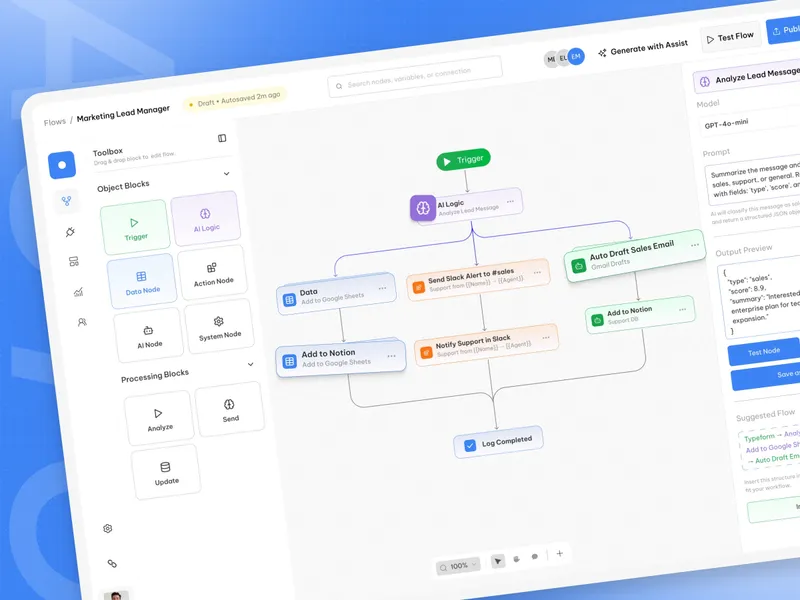
We go from a one-paragraph problem to code, interface, and handoff — with ownership at every stage.
What happens
We land the problem in one sentence, the user in one sentence, and the ‘why now’. We audit stack, data, compliance, and workflows. We define what is AI and what isn't.
What you get
A written brief, a prioritized opportunity map, and the pod shape (who joins and for how long).
What happens
The engineer embeds in your cadence: repo, standups, stakeholders. We build the first slice in staging — integration, agent, or product surface — and align design/messaging if in scope.
What you get
A usable first deliverable, a decision log, and kill/continue criteria for week 4.
What happens
We ship to production, harden evaluation and edge cases, connect CRM/analytics, and close the brand or launch layer if needed. We document internal ownership.
What you get
A live system, basic metrics, a runbook, and a handoff plan.
What happens
We train your team, transfer repos and access, and leave a clear list of what to maintain vs. what to iterate next.
What you get
An autonomous team, clear IP, and an optional light retainer only if you need it.
We pick the stack for the problem — not for this month's quota.
Agents, long-document analysis, and judgmental chat. Vendor-neutral.
Extraction, code, and APIs when the job calls for it.
Multimodality and Google-tool integration.
Typed integrations and APIs in the language your team already uses.
Automation, data, and agent orchestration.
Editable product surfaces ready for marketing handoff.
Fast sites optimized for SEO and GEO.
Prototypes and motion-led sites when design leads.
Fast operational flows without a custom backend.
Conditional automation for more complex operations.
Lead routing, sync, and commercial automation.
Product design and specs so engineering and brand move in parallel.
Drag to explore
Need a tailored approach?
A senior engineer who works from inside your business, not from a generic ticket queue. They turn real needs into code, integrations, and interfaces: auth, data, CRM, AI agents, and the workflows your team already uses. The model started at Palantir and spread to labs like OpenAI and Anthropic for enterprise accounts; Flow™ sizes it for ventures and mid-market teams in Costa Rica.
A fractional CTO advises. An agency ships remote projects. A Forward Deployed Engineer writes production code, decides with your team, and is measured on outcomes inside your stack. At Flow™ we also add design, messaging, and launch — the layer a lab FDE usually leaves out.
Teams of roughly 10–500 people who need to integrate AI or digital product now — without waiting 8–12 months to hire a lab-grade profile. Ideal if your data is scattered, your workflows are half-built, and the product must look and sell — not just ‘work’.
No. We're vendor-neutral: we pick Claude, GPT, Gemini, or open source based on the job. We don't sell tokens, so there's no incentive to push the wrong model. If a workflow shouldn't be AI at all, we say so.
Three to six months, with a small pod (embedded engineer plus design/product as needed). Under three months is usually a delivery sprint; past six months we plan an internal handoff. We set week-4 and week-8 exit criteria up front.
Async-first, with presence when it matters: workshops, kickoffs, and intensive weeks. We don't travel two days a week for show — we schedule physical or virtual co-presence based on security, geography, and project moments.
Book a 30-minute call. Bring one paragraph with the problem, the user, and why now. If it's a fit, we lock the brief, pod shape, and start date. Book with Flow™.
Choose a solid team to back you through the artificial intelligence revolution.